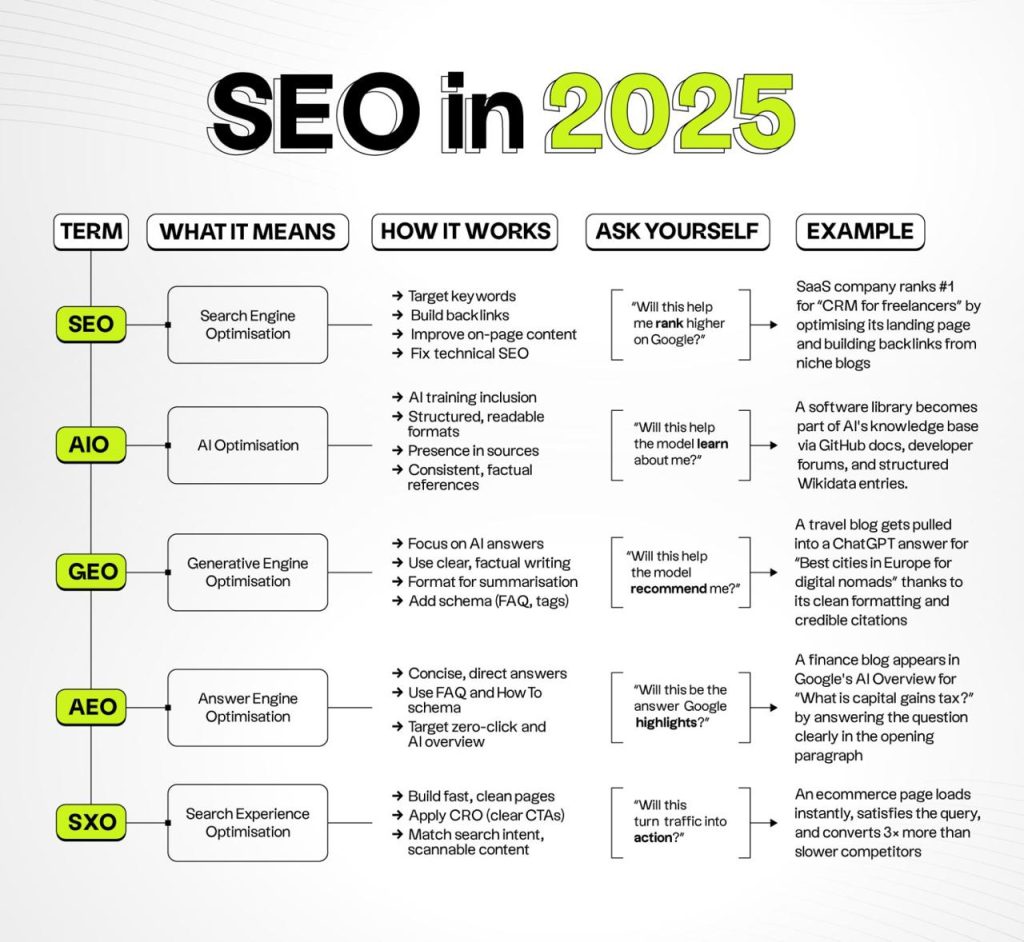
In the ever-evolving landscape of digital marketing, Search Engine Optimization (SEO) has traditionally been synonymous with achieving top rankings on search engine results pages (SERPs). However, as technology advances and user behavior shifts, the scope of SEO is expanding beyond mere rankings. By 2025, SEO will encompass a broader set of strategies that focus not only on visibility but also on AI integration, user experience, and actionable insights. This article explores the future of SEO through five key components: SEO, AIO, GEO, AEO, and SXO. How It Works: Target Keywords: Identify and optimize content around relevant keywords that users are searching for.Build Backlinks: Acquire high-quality backlinks from authoritative sources to boost domain authority.Improve On-Page Content: Optimize titles, meta descriptions, headings, and content structure for readability and relevance.Fix Technical SEO: Ensure fast page load times, mobile responsiveness, and proper site architecture.Ask Yourself:“Will this help me rank higher on Google?” Example:A SaaS company ranks #1 for “CRM for freelancers” by optimizing its landing page with targeted keywords, improving on-page SEO elements, and building backlinks from niche blogs. How It Works: AI Training Inclusion: Align your content with how AI models are trained, using structured data formats.Structured, Readable Formats: Use formats like JSON-LD, Microdata, or RDFa to make information easily digestible for AI.Presence in Sources: Leverage platforms like GitHub, Wikidata, and developer forums to increase your presence in AI knowledge bases.Consistent, Factual References: Provide accurate and verifiable information to build trust with AI systems.Ask Yourself:“Will this help the model learn about me?” Example:A software library becomes part of AI’s knowledge base via GitHub documentation, developer forums, and structured Wikidata entries. This ensures that when developers search for solutions, your library is recognized and recommended by AI-driven tools. How It Works: Focus on AI Answers: Write content that directly addresses questions AI models might generate answers for.Use Clear, Factual Writing: Ensure your content is concise, factual, and easy to summarize.Format for Summarization: Structure your content with clear headings, bullet points, and summaries to facilitate AI summarization.Add Schema (FAQs, Tags): Use schema markup to provide additional context and metadata that AI can use to recommend your content.Ask Yourself:“Will this help the model recommend me?” Example:A travel blog gets pulled into a ChatGPT answer for “Best cities in Europe for digital nomads” because it uses clean formatting, credible citations, and FAQ-style content that aligns with how AI generates responses. How It Works: Concise, Direct Answers: Craft short, precise answers to common questions within the first paragraph of your content.Use FAQ and How-To Schema: Implement schema markup to signal to search engines that your content provides answers to specific queries.Target Zero-Click and AI Overview: Focus on queries where users expect immediate answers, such as definitions, comparisons, or procedural guides.Ask Yourself:“Will this be the answer Google highlights?” Example:A finance blog appears in Google’s AI Overview for “What is capital gains tax?” because it answers the question clearly and concisely in the opening paragraph, making it an ideal candidate for a featured snippet. How It Works: Build Fast, Clean Pages: Optimize for speed and simplicity to ensure users have a seamless browsing experience.Apply CRO (Clear CTAs): Use conversion rate optimization techniques to guide users toward desired actions, such as signing up, purchasing, or subscribing.Match Search Intent, Scannable Content: Create content that matches user intent and is easy to scan, ensuring users find what they need quickly.Ask Yourself:“Will this turn traffic into action?” Example:An e-commerce page loads instantly, satisfies the query with clear product descriptions, and converts 3× more than slower competitors by applying effective CTAs and optimizing the user journey. By now, SEO will no longer be solely about ranking on Google. Instead, it will encompass a holistic approach that includes AI optimization, generative engine alignment, answer engine prominence, and exceptional user experience. Marketers who adapt to these trends will not only achieve higher visibility but also drive meaningful engagement and conversions. The future of SEO is about understanding and integrating with AI, while always putting the user first, ensuring content is not only discovered but also recommended and trusted. Read more about SEO