Community Manager

How to adapt and build an effective SEO strategy in the AI era

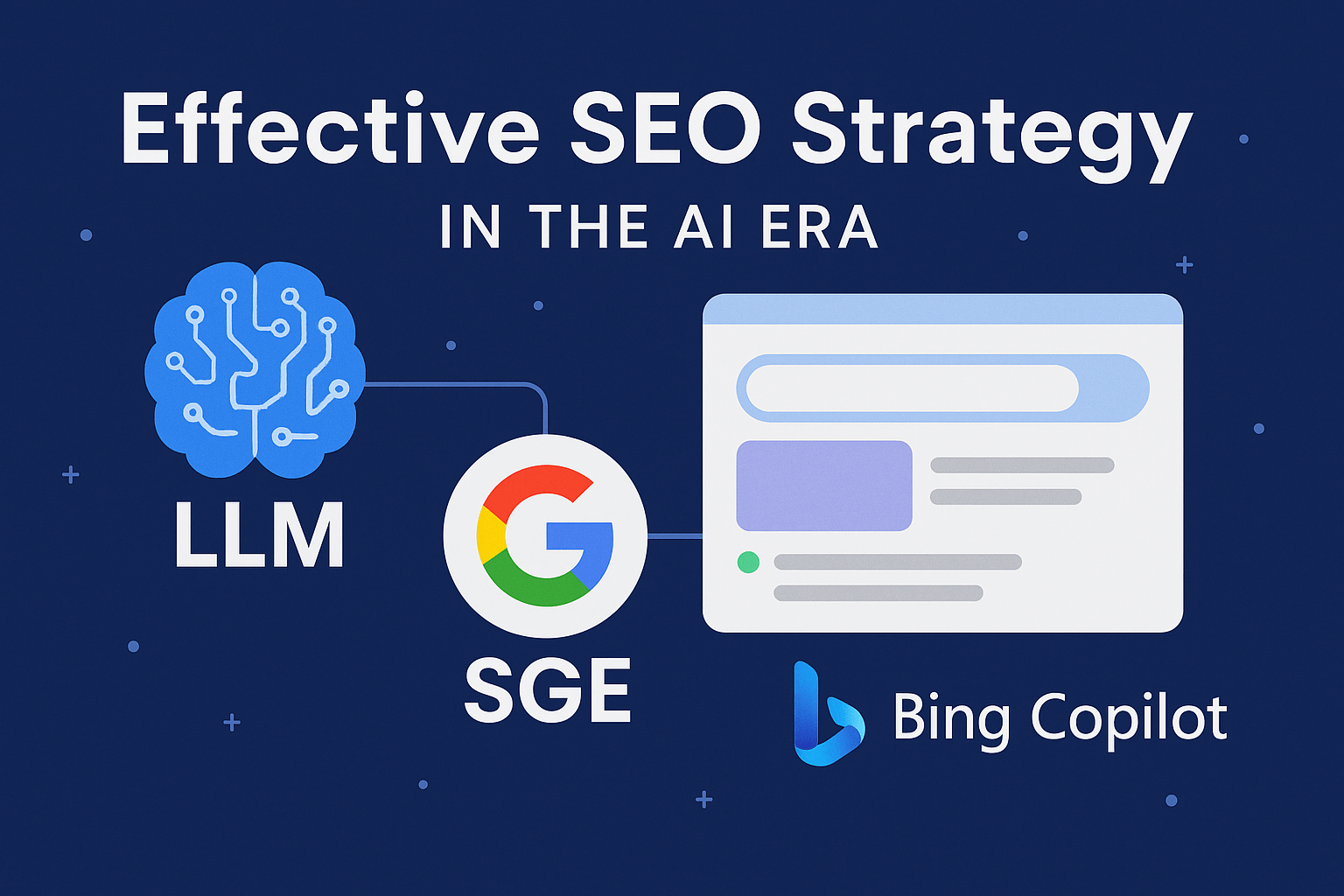
The landscape of SEO has changed dramatically due to the rise of Large Language Models (LLMs), generative AI search (like Google SGE, Bing Copilot), and shifting user behavior. Traditional search engine traffic is becoming less reliable, especially for informational or generic queries. Here’s how to adapt and build an effective SEO strategy in the AI era: Mindset Shift: From “Ranking Pages” to “Owning Topics” Old SEO: Optimize pages to rank on Google’s 10 blue linksNew SEO: Build authoritative knowledge assets across formats (text, video, structured data) and make your brand visible in AI-generated answers, niche platforms, and multi-channel environments 1. Focus on “Brand + Entity SEO” Why? LLMs are trained on entities, not just keywords. Your brand needs to be understood as an authority and trusted source. Actions: 2. Create Content That’s “AI-Ready” Why? LLMs (like ChatGPT or Google Gemini) extract concise, high-trust content from websites to answer questions. Actions: 3. Build Expert-Led, Trustworthy Content Google’s E-E-A-T still matters — especially in AI. Actions: 4. Dominate Niche & Localized Queries Broad topics get scraped by LLMs and commoditized. Specific and localized content is still defensible. Actions: 5. Diversify Traffic Beyond Google Why? Even a top-ranked site may see declining CTR in generative SERPs. Actions: 6. Recalculate KPIs and Analytics Why? Bot traffic is inflating metrics. Conversion ≫ Traffic. Actions: 7. Leverage AI to Power SEO Execution Use AI to stay efficient — just not lazy. Actions: Bonus: SEO in the Age of Agents Prepare your content and services for integration into AI Agents (like ChatGPT plugins, smart CRM assistants, autonomous agents). That includes: Tools to Help You Read more about SEO

How to adapt and build an effective SEO strategy in the AI era Read More »

What Is Performance Media? A Complete Guide for Modern Marketers

In the fast-evolving digital age, marketing is no longer just about creative campaigns or brand awareness—it’s about measurable results. That’s where Performance Media comes in. Whether you’re a startup in Phnom Penh or a regional e-commerce brand, understanding performance media is essential to generate qualified leads, drive conversions, and optimize your advertising budget. This article explains everything you need to know about performance media: what it is, how it works, key channels, strategy tips, and why it’s critical for growth. What is Performance Media? Performance Media refers to data-driven, results-oriented digital advertising. It focuses on measurable actions—such as clicks, leads, purchases, or app installs—rather than vague metrics like impressions or reach. You pay for actual performance, not just exposure. It’s called “performance” because success is judged by clear KPIs (Key Performance Indicators), such as: How Does Performance Media Work? Performance media relies on algorithmic ad platforms like Meta Ads (Facebook, Instagram), Google Ads, TikTok Ads, LinkedIn Ads, and programmatic display. These platforms: The key difference from traditional media? You can track, test, and tweak—in real time. Common Channels Used in Performance Media Why Performance Media Matters Businesses today don’t want vague “brand awareness.” They want leads, sales, and ROI. Here’s why performance media is essential: Especially for startups and SMEs, performance media offers a low-risk, high-reward approach to digital marketing. Components of a Successful Performance Media Campaign Performance Media vs. Traditional Digital Marketing Feature Traditional Media Performance Media Goal Awareness Conversions & ROI Metrics Impressions, Views CPL, CPA, ROAS Cost Model Flat fee or CPM Pay-per-click/action Optimization Periodic Real-time Risk High (fixed cost) Low (performance-based) When Should You Use Performance Media? ⚠️ Common Mistakes to Avoid Final Thoughts Performance Media isn’t just a tactic—it’s a mindset. It’s about accountability, measurement, and growth. Whether you’re spending $100 or $100,000, performance media gives you control over your digital marketing outcomes. At DCA, we help Cambodian and regional brands master the art and science of performance media through strategic planning, creative testing, and ongoing optimization across platforms like Meta, Google, and TikTok. 📞 Ready to Grow With Performance Media? Talk to our team at DCA today and discover how performance media can drive real business results—fast. 👉 Contact us or learn more about our Performance Media Services

What Is Performance Media? A Complete Guide for Modern Marketers Read More »

SEO in 2025: Beyond Google Rankings

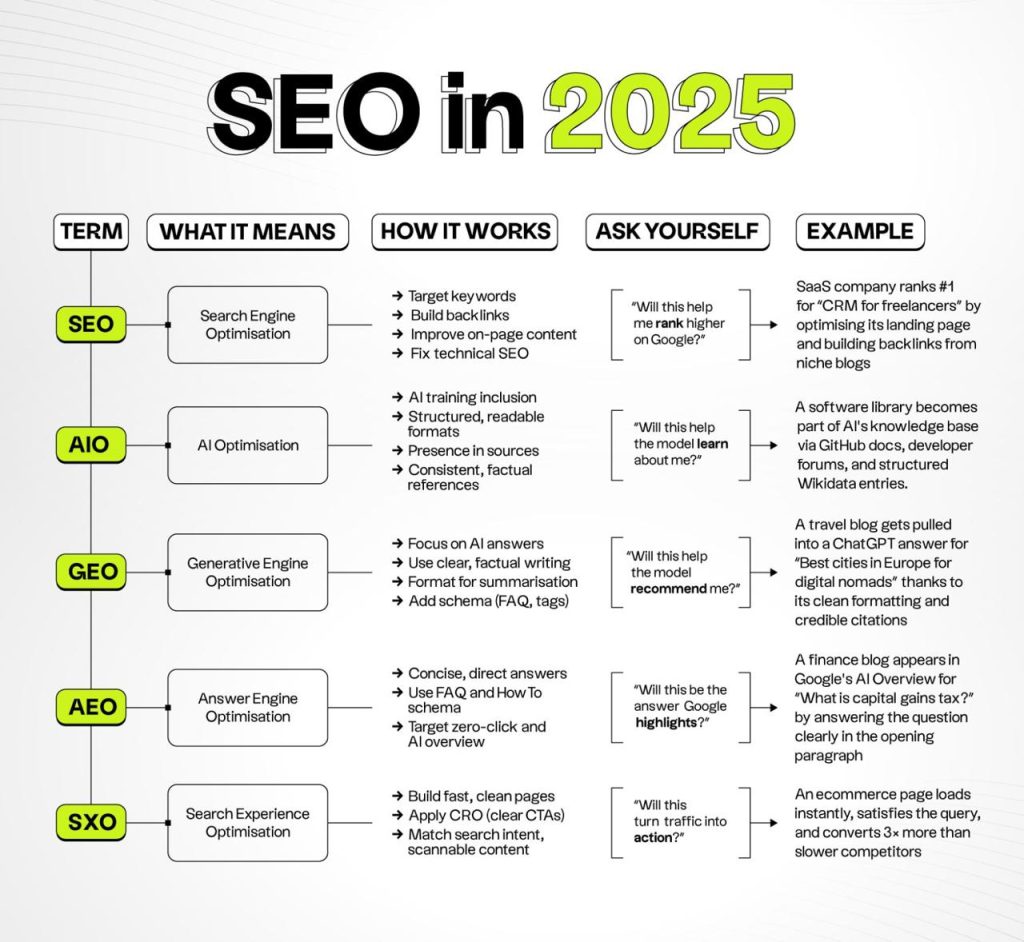
In the ever-evolving landscape of digital marketing, Search Engine Optimization (SEO) has traditionally been synonymous with achieving top rankings on search engine results pages (SERPs). However, as technology advances and user behavior shifts, the scope of SEO is expanding beyond mere rankings. By 2025, SEO will encompass a broader set of strategies that focus not only on visibility but also on AI integration, user experience, and actionable insights. This article explores the future of SEO through five key components: SEO, AIO, GEO, AEO, and SXO. How It Works: Target Keywords: Identify and optimize content around relevant keywords that users are searching for.Build Backlinks: Acquire high-quality backlinks from authoritative sources to boost domain authority.Improve On-Page Content: Optimize titles, meta descriptions, headings, and content structure for readability and relevance.Fix Technical SEO: Ensure fast page load times, mobile responsiveness, and proper site architecture.Ask Yourself:“Will this help me rank higher on Google?” Example:A SaaS company ranks #1 for “CRM for freelancers” by optimizing its landing page with targeted keywords, improving on-page SEO elements, and building backlinks from niche blogs. How It Works: AI Training Inclusion: Align your content with how AI models are trained, using structured data formats.Structured, Readable Formats: Use formats like JSON-LD, Microdata, or RDFa to make information easily digestible for AI.Presence in Sources: Leverage platforms like GitHub, Wikidata, and developer forums to increase your presence in AI knowledge bases.Consistent, Factual References: Provide accurate and verifiable information to build trust with AI systems.Ask Yourself:“Will this help the model learn about me?” Example:A software library becomes part of AI’s knowledge base via GitHub documentation, developer forums, and structured Wikidata entries. This ensures that when developers search for solutions, your library is recognized and recommended by AI-driven tools. How It Works: Focus on AI Answers: Write content that directly addresses questions AI models might generate answers for.Use Clear, Factual Writing: Ensure your content is concise, factual, and easy to summarize.Format for Summarization: Structure your content with clear headings, bullet points, and summaries to facilitate AI summarization.Add Schema (FAQs, Tags): Use schema markup to provide additional context and metadata that AI can use to recommend your content.Ask Yourself:“Will this help the model recommend me?” Example:A travel blog gets pulled into a ChatGPT answer for “Best cities in Europe for digital nomads” because it uses clean formatting, credible citations, and FAQ-style content that aligns with how AI generates responses. How It Works: Concise, Direct Answers: Craft short, precise answers to common questions within the first paragraph of your content.Use FAQ and How-To Schema: Implement schema markup to signal to search engines that your content provides answers to specific queries.Target Zero-Click and AI Overview: Focus on queries where users expect immediate answers, such as definitions, comparisons, or procedural guides.Ask Yourself:“Will this be the answer Google highlights?” Example:A finance blog appears in Google’s AI Overview for “What is capital gains tax?” because it answers the question clearly and concisely in the opening paragraph, making it an ideal candidate for a featured snippet. How It Works: Build Fast, Clean Pages: Optimize for speed and simplicity to ensure users have a seamless browsing experience.Apply CRO (Clear CTAs): Use conversion rate optimization techniques to guide users toward desired actions, such as signing up, purchasing, or subscribing.Match Search Intent, Scannable Content: Create content that matches user intent and is easy to scan, ensuring users find what they need quickly.Ask Yourself:“Will this turn traffic into action?” Example:An e-commerce page loads instantly, satisfies the query with clear product descriptions, and converts 3× more than slower competitors by applying effective CTAs and optimizing the user journey. By now, SEO will no longer be solely about ranking on Google. Instead, it will encompass a holistic approach that includes AI optimization, generative engine alignment, answer engine prominence, and exceptional user experience. Marketers who adapt to these trends will not only achieve higher visibility but also drive meaningful engagement and conversions. The future of SEO is about understanding and integrating with AI, while always putting the user first, ensuring content is not only discovered but also recommended and trusted. Read more about SEO

SEO in 2025: Beyond Google Rankings Read More »

Be Found on Google: How to Boost Your Business’s Online Presence

In today’s digital-first world, if your business isn’t showing up on Google, it might as well not exist—at least in the eyes of most consumers. Did you know that 93% of online experiences begin with a search engine , and Google dominates that space with over 86% global market share? That means if you’re not leveraging Google to its fullest, you’re missing out on countless opportunities to connect with potential customers. At DCA , we believe every business deserves to be found—and thrive—online. In this post, we’ll walk you through how Google can be your secret weapon to building a powerful online presence and driving real results for your business. Why Being “Found on Google” Matters Think about the last time you looked for something. Chances are, you opened Google and typed in a few keywords. Whether it was “best coffee shop near me” or “how to fix a leaky faucet,” you weren’t alone. Millions of people use Google every day to find answers, products, and services—just like yours. If your business doesn’t appear in those search results, you’re invisible to those people. And invisibility equals lost sales, missed leads, and wasted marketing efforts. So how do you make sure your business shows up where it matters most? Let’s break it down. 1. Get Listed on Google My Business (Now Called Google Business Profile) This is your first step toward local visibility. Google Business Profile (GBP) allows you to manage how your business appears across Google Search and Maps. When someone searches for services or products you offer, your GBP listing could show up right at the top—with your name, address, phone number, reviews, photos, and more. Why It Works: Pro Tip: Keep your information accurate, upload high-quality images regularly, and respond to reviews promptly to build credibility. 2. Optimize Your Website for Google Search Google wants to give users the best possible results—which means your website needs to be fast, relevant, and helpful. This is where Search Engine Optimization (SEO) comes into play. Here’s what Google looks for: When you optimize your site for these factors, Google rewards you with better rankings, which translates to more organic traffic. Pro Tip: Use tools like Google Search Console to monitor your performance and identify issues holding you back. 3. Run Google Ads for Instant Visibility Want to jump to the top of Google instantly? That’s where Google Ads come in. Whether you’re launching a new product, promoting a limited-time offer, or trying to get more calls, Google Ads can put your business in front of the right audience at the right time. Types of Google Ads You Can Use: With smart targeting, budget control, and real-time analytics, Google Ads give you full control over your advertising strategy. Pro Tip: Combine Google Ads with remarketing to re-engage visitors who’ve already shown interest in your brand. 4. Use Google Analytics to Understand Your Audience You can’t improve what you don’t measure. Google Analytics gives you a behind-the-scenes look at how users interact with your website. From bounce rates to conversion tracking, this free tool is essential for making data-driven decisions. What You Can Learn: Understanding your audience helps you tailor your messaging, improve user experience, and ultimately grow your business. Pro Tip: Set up custom goals in Google Analytics to track specific actions like newsletter signups, contact form submissions, or purchases. 5. Leverage YouTube Through Google YouTube is the second-largest search engine in the world—and it’s owned by Google. If your business isn’t using YouTube to educate, entertain, or engage your audience, you’re missing out. Whether it’s how-to videos, customer testimonials, or behind-the-scenes content, YouTube helps you build authority and trust while improving your SEO. Pro Tip: Optimize your video titles, descriptions, and tags with keywords so your videos show up in both YouTube and Google search results. 6. Encourage and Manage Customer Reviews on Google Online reviews are one of the most powerful tools for local businesses. Google pulls reviews directly into your Business Profile, influencing both your local ranking and consumer trust. The more positive reviews you have, the more likely someone will click on your listing instead of your competitor’s. Pro Tip: Make it easy for happy customers to leave reviews. Send follow-up emails, add links to your receipts, or create signage in-store reminding them to review you. 7. Stay Updated with Google’s Latest Features Google is always evolving. From AI-powered search results to voice search and featured snippets, staying ahead of the curve ensures your business remains competitive. At [Your DCA Name] , we keep our finger on the pulse of Google updates and trends so you don’t have to. Our goal is to future-proof your digital strategy and ensure your business thrives—not just survives—in the ever-changing digital landscape. Final Thoughts: Be Found, Be Trusted, Be Successful Being found on Google isn’t just about visibility—it’s about building trust , driving growth , and connecting with your audience where they already are. From optimizing your website and managing your Google Business Profile to running targeted ads and analyzing performance, there are countless ways Google can help your business shine online. And the best part? You don’t have to do it alone. At DCA , we specialize in helping businesses like yours harness the power of Google to grow their online presence, attract more customers, and achieve lasting success. Ready to be found on Google? 👉 Contact us today to schedule a free consultation and see how we can help your business rise to the top of the search results. If you found this post helpful, share it with a fellow business owner or leave a comment below! Have questions about getting your business noticed on Google? We’d love to hear from you. Stay visible.Stay relevant.Be Found on Google. Get Your Business Mentioned in Google’s AI Answers

Be Found on Google: How to Boost Your Business’s Online Presence Read More »

How AI is Changing SEO in 2025: Lessons from HubSpot, Canva, and Figma

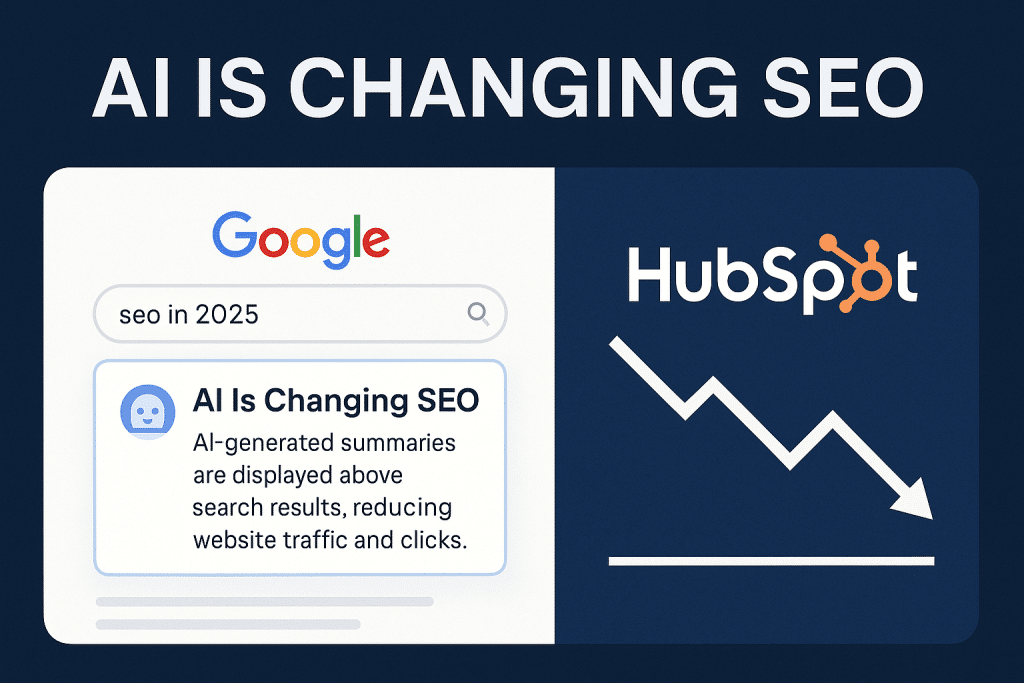
In 2025, we’re seeing a major shift in how search engines work — and it’s driven by Google’s AI Overviews. Big names like HubSpot, Canva, and Figma have already seen massive drops in organic traffic — in some cases, up to 80%. This isn’t just a temporary dip. It’s a sign that traditional SEO strategies are no longer enough. So how exactly is AI changing SEO — and what can you do about it? What Are Google AI Overviews? Google AI Overviews are instant answers generated by artificial intelligence and shown at the top of search results. They pull insights from multiple sources to answer user questions — without sending clicks to websites. For example: These were once prime SEO targets. Now, they’re often answered before users ever click. HubSpot Lost 80% of Organic Traffic — But They Were Ready Yes, HubSpot’s blog traffic dropped drastically. But here’s what most people missed: They anticipated this shift. Instead of doubling down on blog posts, HubSpot evolved its strategy: ✅ Influence Channels: They invested in YouTube shows, podcasts, and newsletters✅ Media Acquisition: They bought The Hustle to build a loyal content ecosystem✅ Creator Programs: Expanding brand reach through community and influencers✅ AI Discoverability: Their videos and thought leadership now appear in ChatGPT and Perplexity✅ Brand Equity: They tripled down on brand building, not just search traffic Why Most SEO Strategies Are Failing in 2025 The old SEO playbook focused on keyword-heavy, top-of-funnel content. That worked when humans clicked. But today? AI answers better and faster. Generic content like: …is now handled by AI, making traditional SEO less effective. What Kind of Content Still Works in an AI-Led Search World? To stay relevant in 2025, your content must do what AI can’t: 👉 Share personal stories👉 Deliver original data or firsthand insight👉 Speak with deep POVs to niche audiences👉 Build trust and emotional resonance This is the era of AI-powered search and human-centered content. Future-Proof SEO Strategy for 2025 To win in the new SEO landscape, your content should be: 🔹 Answer-Focused: Use structured questions and clear answers🔹 Expert-Led: Include real opinions, not just definitions🔹 Visually Rich: Embed charts, videos, or infographics🔹 Authoritative: Reference credible sources or show credentials🔹 Multichannel Optimized: Repurpose content for YouTube, podcasts, LinkedIn Conclusion: SEO Isn’t Dead — But Generic Content Is Google’s AI Overviews have changed the game. But that doesn’t mean SEO is over — it means you need a smarter strategy. Focus on content that: Is your SEO strategy evolving with the shift — or stuck in the past? Frequently Asked Questions (FAQ) What are Google AI Overviews? Google AI Overviews are AI-generated summaries shown at the top of search results. They provide instant answers to user queries without requiring a website click. How is AI affecting SEO in 2025? AI is reducing clicks to traditional blog posts by providing direct answers. This forces marketers to shift toward authority-driven, human-first content strategies. What kind of content ranks in AI search results? Content with original insights, expert commentary, multimedia assets, and high trust signals is more likely to be cited in AI-generated answers. Read More: Google AI Answers

How AI is Changing SEO in 2025: Lessons from HubSpot, Canva, and Figma Read More »

How to Get Your Business Mentioned in Google’s AI Answers (Cambodia Edition)
By Hun Heang As Google shifts from “10 blue links” to AI-generated answers, a troubling question emerges: Will Cambodian businesses disappear from search results unless they adapt? Here’s how to future-proof your visibility in the age of AI Overviews (formerly SGE). Why This Matters for Cambodia 7 Proven Tactics (Tested in Cambodia) 1. Hijack “People Also Ask” Sections Google’s AI sources 72% of answers from these (Ahrefs study). ✅ Actionable Fix: Case Study:AboutAsia Travel ranks for 15+ Angkor Wat FAQs by structuring content as: Copy <h3>How much is Angkor Wat ticket in 2025?</h3> <p>As of June 2024, fees are: (table with USD/KHR prices)</p> 2. Become a Source for Journalists Google prioritizes content cited by news outlets. ✅ Cambodia-Specific Strategy: Pro Tip:A single backlink from tourismcambodia.org can boost AI visibility by 3X (SEMrush data) 3. Optimize for E-E-A-T Google’s AI demands: ✅ Local Example:Jaya House River Park increased AI mentions by: 4. Schema Markup Cheat Sheet html Copy <script type=”application/ld+json”> { “@context”: “https://schema.org”, “@type”: “Hotel”, “name”: “Rambutan Resort”, “description”: “Award-winning eco-resort in Sihanoukville”, “address”: { “@type”: “PostalAddress”, “streetAddress”: “Street 110”, “addressLocality”: “Phnom Penh” } } </script> Run HTML 5. Voice Search Optimization Cambodians increasingly use: ✅ Fix: 6. Content Freshness Hacks Google’s AI prefers: 7. The Backlink Shortcut Prioritize links from: Case Study:“After Heritage Suites Hotel was featured in a Phnom Penh Post article (2023), their ‘Siem Reap boutique hotel’ FAQ page began appearing in Google’s AI answers.” How to Verify: Labs.google.com/search (SGE preview tool) Search [site:phnompenhpost.com “Heritage Suites”] Check current AI visibility via: Google Search Console (Performance > Search Appearance)

How to Get Your Business Mentioned in Google’s AI Answers (Cambodia Edition) Read More »

Winning Digital Marketing Strategies for Cambodia’s Travel & Hospitality Industry in 2025

By Hun Heang As Cambodia’s tourism rebounds post-pandemic, the rules of digital marketing are changing fast. With 8.3 million international visitors projected for 2025 (MoT), travel businesses can’t rely on pre-COVID strategies anymore. From AI-powered personalization to TikTok-driven bookings, here’s how to craft a future-proof digital marketing strategy for Cambodia’s travel sector. 1. The 2025 Cambodian Traveler: Know Your Audience Key Shifts: Actionable Insight:Create market-specific landing pages (e.g., “For Thai Visitors: Visa-Free Stays in Siem Reap”) with localized payment options. 2. Owned Media: Your Website is Now a Booking Engine 2025 Must-Haves:✅ 3-click booking max (Google’s 2025 Page Experience update penalizes complex flows)✅ AI chatbots for FAQs (e.g., Plantation Urban Resort uses Khmer/English chat)✅ Mobile-first design (60% of Cambodia’s travel searches are on phones) Verified Cambodia Example:Bambu Hotel (Siem Reap) publicly shared: 3. Google’s New Travel Ecosystem (Beyond GMB) Optimize For: Pro Tip:Use schema markup for tours/hotels to appear in Google’s interactive travel modules. 4. TikTok & Reels: The New Travel Catalogs 2025 Content Trends: Viral Example:Siem Reap Food Tours gained 12K followers in 3 months by posting: 5. Hyper-Personalized Paid Ads 2025 Targeting Strategies: Budget Tip:Shift 30% of Facebook ad spend to TikTok Spark Ads (boost high-performing organic posts). 6. The Trust Factor: Social Proof 2.0 Beyond Google Reviews: 7. Sustainability = Profitability Marketable Green Practices: 2025 Digital Marketing Checklist for Cambodian Travel Businesses Priority Action Item Platform Urgent Implement AI chatbot with Khmer support Website High Create 10+ TikTok “hidden gem” videos TikTok/Reels High Migrate to Google’s new travel APIs Google Travel Medium Develop AR room previews Meta/Web Final Thought: Adapt or Get Booked Out In 2025, Cambodia’s travel winners will be those blending AI efficiency with human-centric experiences. The tools have changed, but the goal remains: Make every digital touchpoint feel as warm as a Cambodian smile. Which 2025 trend will you implement first? Heang is a digital strategist for Southeast Asia’s tourism sector. Follow Heang on LinkedIn for data-driven travel marketing insights. Read More: Google Search Trends in Cambodia

Winning Digital Marketing Strategies for Cambodia’s Travel & Hospitality Industry in 2025 Read More »

Google Search Trends in Cambodia

Google Search Trends in Cambodia: Is Google Losing to Social Media?

By Hun Heang In Cambodia’s digital landscape, a quiet battle is unfolding. On one side stands Google, the world’s dominant search engine. On the other, Facebook, TikTok, and Telegram—platforms where many Cambodians now bypass traditional search entirely. So, what do Google Search Trends really reveal about Cambodia’s online behavior? Is Google still the go-to for information, or are social media and messaging apps taking over? Let’s dive into the data—and the debate. The Case for Google’s Dominance in Cambodia 1. Google Still Leads for Commercial Intent While Facebook dominates social interactions, Google remains the preferred platform for high-intent searches—especially when Cambodians are ready to buy, book, or research. 2. Google’s Data Reflects Cambodia’s Growth Google Trends shows rising interest in: This suggests Google remains a key tool for education, business, and investment decisions—not just casual browsing. 3. SEO = Long-Term Business Growth Unlike social media (where posts disappear quickly), Google search rankings can deliver traffic for years. Businesses investing in SEO gain a sustainable edge—especially as Cambodia’s internet economy matures. The Counterargument: Social Media is Eating Google’s Lunch 1. Facebook is Cambodia’s De Facto “Search Engine” For many Cambodians, especially outside Phnom Penh: A 2022 study found 72% of Cambodians use Facebook daily, while Google Search usage is harder to measure. 2. Younger Users Prefer TikTok & Video Search Gen Z and millennials increasingly: 3. Low Trust in Google’s Localized Results Many users complain that: The Hybrid Reality: Cambodia’s Dual Search Behavior The truth? Cambodians use both Google and social media—but for different purposes: Use Case Google Facebook/TikTok Finding a business ✅ “dentist near me” ❌ (But may ask in local FB groups) Shopping ❌ (Low trust) ✅ Marketplace, seller pages Learning/Research ✅ “Cambodia visa requirements” ❌ (But may watch YouTube videos) News & Trends ❌ (Delayed, less engaging) ✅ Viral posts, live streams What This Means for Businesses in Cambodia 1. For Google-Centric Industries (Tourism, B2B, Education) 2. For Social-Dependent Businesses (E-commerce, F&B, Retail) 3. The Winning Strategy: Synergy Final Verdict: Is Google Still Relevant in Cambodia? Yes—but not for everything. The key is not choosing one over the other but understanding where your audience spends time—and meeting them there. Heang is a digital strategist covering Cambodia’s tech and consumer trends. Follow him on LinkedIn for more insights. Read More about SEO in Cambodia

Google Search Trends in Cambodia: Is Google Losing to Social Media? Read More »

How to Optimize Google My Business in Cambodia: A Step-by-Step Guide

By Hun Heang In Cambodia’s fast-growing digital economy, Google My Business (GMB) is one of the most powerful—yet underutilized—tools for local businesses. Whether you run a restaurant in Phnom Penh, a guesthouse in Siem Reap, or a tech startup in Battambang, a well-optimized GMB listing can dramatically boost your visibility on Google Search and Maps. But many Cambodian businesses either don’t have a GMB profile or have incomplete, outdated listings. So, how do you optimize yours correctly? Here’s a step-by-step guide tailored for Cambodia’s market. Why Google My Business Matters in Cambodia Before diving into optimization, let’s understand why GMB is crucial: Step 1: Claim or Create Your Google My Business Listing If you don’t have a GMB profile: If your business is already listed but unclaimed: Step 2: Optimize Your GMB Profile for Cambodia Once verified, fill out every section to maximize visibility: 1. Business Information 2. Add High-Quality Photos 3. Write a Compelling Business Description 4. Enable Messaging & Booking Step 3: Get More Reviews (The Cambodian Way) Reviews = Social Proof. Here’s how to encourage them: Step 4: Use GMB Posts for Promotions & Updates GMB lets you publish mini-announcements that appear in searches: Step 5: Track Performance with GMB Insights Monitor how customers find you: Common Mistakes Cambodian Businesses Make ❌ Incomplete profiles (missing hours, photos, or category).❌ Ignoring reviews (not responding to feedback).❌ Inconsistent NAP (different phone numbers on GMB vs. Facebook). Final Verdict: Is GMB Worth It in Cambodia? Absolutely! Even with Facebook’s dominance, Google My Business is essential for local businesses in Cambodia. It’s free, easy to manage, and directly influences your visibility in local searches. Action Step: Spend 30 minutes today optimizing your GMB profile—it could be the difference between a customer finding you or your competitor. Heang is a digital marketing specialist focusing on Cambodia’s growing tech scene. Follow him on LinkedIn for more tips. Read More about SEO in Cambodia

How to Optimize Google My Business in Cambodia: A Step-by-Step Guide Read More »

A sleek minimalist workspace in a toy store with stylish decor and digital display.

Does SEO Work in the Cambodian Market? SEO in Cambodia: Debate and Strategies

By Hun Heang In the ever-evolving world of digital marketing, Search Engine Optimization (SEO) remains a hotly debated strategy—especially in emerging markets like Cambodia. While businesses in the West have long relied on SEO to dominate search rankings, its effectiveness in Cambodia is still under scrutiny. Does SEO truly work here, or is it just another overhyped marketing buzzword? The Case for SEO in Cambodia Proponents argue that SEO is not only relevant but essential for businesses in Cambodia. With internet penetration growing rapidly—reaching over 70% of the population—more Cambodians are turning to Google (and, to some extent, local platforms like Sabay) to find products, services, and information. The Counterargument: SEO’s Limitations in Cambodia However, skeptics point out several challenges that make SEO less effective—or at least, different—in Cambodia compared to Western markets. The Middle Ground: SEO as Part of a Broader Strategy The truth likely lies somewhere in between. SEO can work in Cambodia, but it’s not a magic bullet. Here’s how businesses can approach it smartly: Final Verdict: Does SEO Work in Cambodia? The answer isn’t a simple yes or no. For certain industries (e.g., tourism, real estate, B2B services), SEO is a powerful tool. For others (small retail, street food vendors), social media might be more impactful. The key takeaway? SEO isn’t dead in Cambodia—it’s just different. Businesses must assess their audience, competition, and resources before diving in. Those who adapt their strategies to Cambodia’s unique digital landscape will see results; those who expect Western-style SEO success overnight will be disappointed. What’s your take? Is SEO worth the investment in Cambodia, or are businesses better off focusing elsewhere? Let’s debate. Heang is a digital strategist and media commentator focusing on Cambodia’s tech and business landscape. Follow them on [Social Media Handle] for more insights. Read More: SEO Trends in Cambodia

Does SEO Work in the Cambodian Market? SEO in Cambodia: Debate and Strategies Read More »